
The Scepter
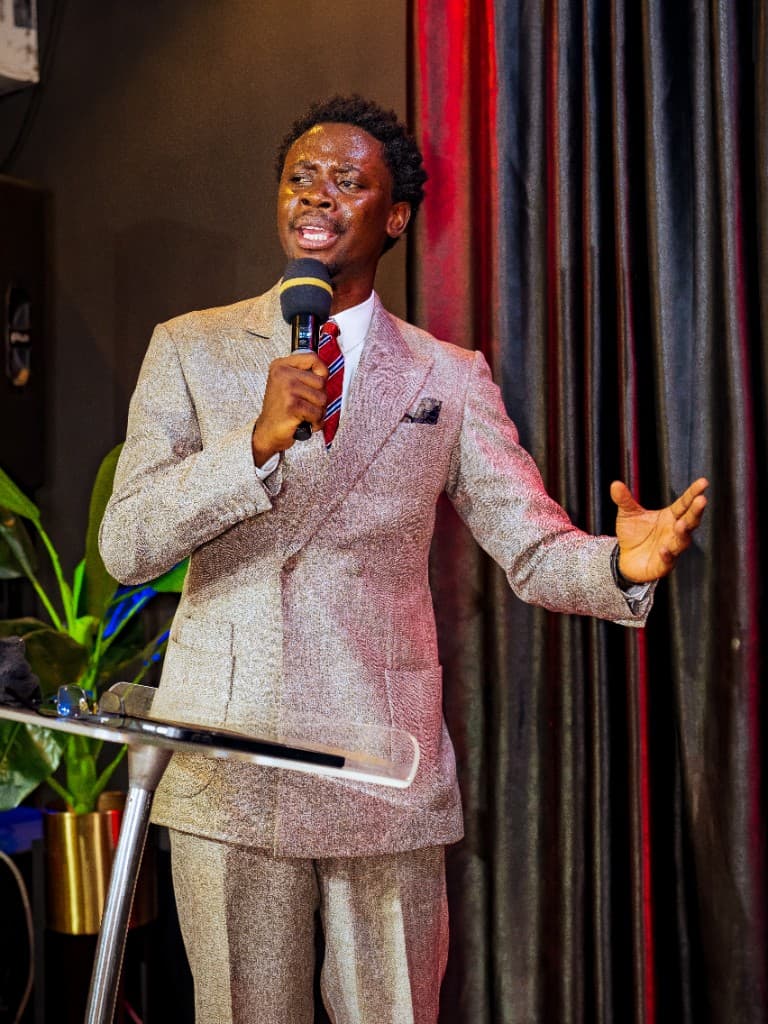
Precious Alo preaching with an open hand, microphone raised, against a burgundy-lit curtain

Our doctrine

Kings and priests, by the whole counsel of Scripture.

Our doctrine is built on four converging streams of Scripture. Taken together, they form one complete vision of what God intends for the believer.

Part one

The theological anchors

These four anchors are non-negotiable. They are the ground on which everything else is built.

I

Dominion and stewardship

The Genesis Mandate

“Let Us make man in Our image, according to Our likeness; let them have dominion…”
Genesis 1:26

Before the Fall, before the Law, before the Cross, God's first word about humanity was a word about function: dominion. Man was created to govern, steward and develop creation, reflecting the rule of God through image-bearers.

The Fall did not abolish this mandate. Redemption restores it, not merely as forgiveness of sin but as the re-commissioning of image-bearers into their original calling, exercised from formation, not ambition.

II

The priest-king archetype

The Melchizedek Order

“You are a priest forever according to the order of Melchizedek.”
Psalm 110:4 · Hebrews 7

Under the Law, priests came from Levi and kings from Judah; the two offices were kept apart. Melchizedek held both, and Christ, a priest after his order, holds both forever.

The believer, united to Christ, participates in this order. It is a statement about what the redeemed person is: a priest-king after the order of the One who is both Lamb and Lion.

III

The ecclesial declaration

The Royal Priesthood

“But you are a chosen generation, a royal priesthood, a holy nation, His own special people, that you may proclaim the praises of Him who called you out of darkness into His marvelous light.”
1 Peter 2:9

Peter is writing to the Church, to ordinary believers scattered across the Roman world. He calls them a royal priesthood: not a metaphor, not a future hope, but a present reality.

The verse describes not only what believers are, but what they are for: to proclaim the praises of Him who called them. The identity is missional. The Scepter does not invent an identity for believers; it forms them into the one Scripture has already declared.

IV

The eschatological seal

The Eternal Confirmation

“And have made us kings and priests to our God; and we shall reign on the earth.”
Revelation 1:6 · 5:10

If 1 Peter declares what the Church is now, Revelation confirms that this identity is eternal. John opens his vision anchored in the believer's identity as kings and priests.

From the Genesis mandate, through Melchizedek, declared by Peter and confirmed by John: the question is not whether believers are kings and priests, but whether they are functioning as such. Formation is the bridge between identity and function.

Part two · The central thesis

The altar precedes the throne.

Priesthood produces kingship. You cannot reign without first being formed in the priestly office. Authority, influence and cultural leadership are the fruit of a life shaped at the altar.

Formed as priests

What priestly formation means

A person genuinely formed in these disciplines carries a different quality of authority. Their governance is not self-serving and their influence is not self-promoting. It is priestly kingship: authority exercised from the altar.

  1. 01

    Intimacy

    Access to the Presence is the priest's first assignment.

  2. 02

    Intercession

    The priest stands between God and the people.

  3. 03

    Sacrifice

    The priest learns to give what costs him something.

  4. 04

    Holiness

    Set apart, not merely set aside.

  5. 05

    Mediation

    Carrying others before God, and carrying God to others.

What we correct

Altar and throne, together

The Scepter refuses every failure that separates what God has joined. Formed and deployed. Intimate and influential.

Failure one

Kingship without priesthood

The ambitious believer: gifted, influential and present in culture, but spiritually shallow. Influence arrives before formation and becomes an extension of an unformed self.

Failure two

Priesthood without kingship

The pietistic believer: deeply intimate with God, but culturally absent. Formed but never deployed, leaving territory they were meant to steward.

Failure three

Formation without mission

Believers who are formed but never sent. The priest who never intercedes and the king who never witnesses have both missed their calling.

A critical clarification

Formation for witness, not dominion.

The Scepter is not building Christian elites. It is forming witnesses. The vision of kings and priests in every sphere is not a vision of conquest or a spiritual aristocracy. It is a vision of light carried into places that have not yet encountered it.

Melchizedek's first recorded act was a blessing, not a declaration of power. Revelation's kings and priests stand beside the Lamb who was slain, whose mission was redemption, not domination.

We go into every sphere not to dominate but to witness. Not to build our kingdoms but to make His name known.

From doctrine to formation

Formation is the bridge between identity and function.